The challenge
Farmers face mounting pressures: rising input costs, climate volatility, and increasingly complex decisions about maintaining profitability whilst transitioning to sustainable practices.
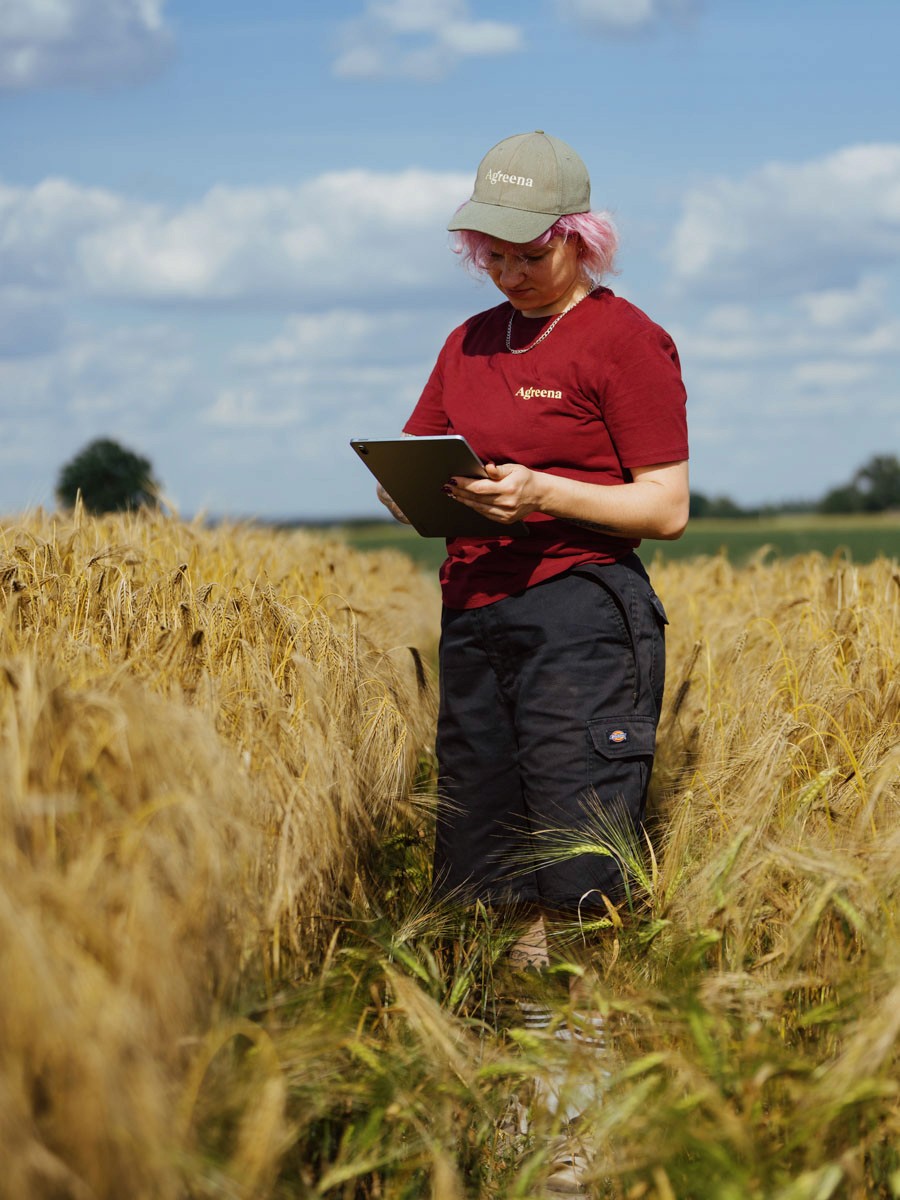
While at Agreena, I led research and experience design for an AI farming assistant designed to earn their trust.
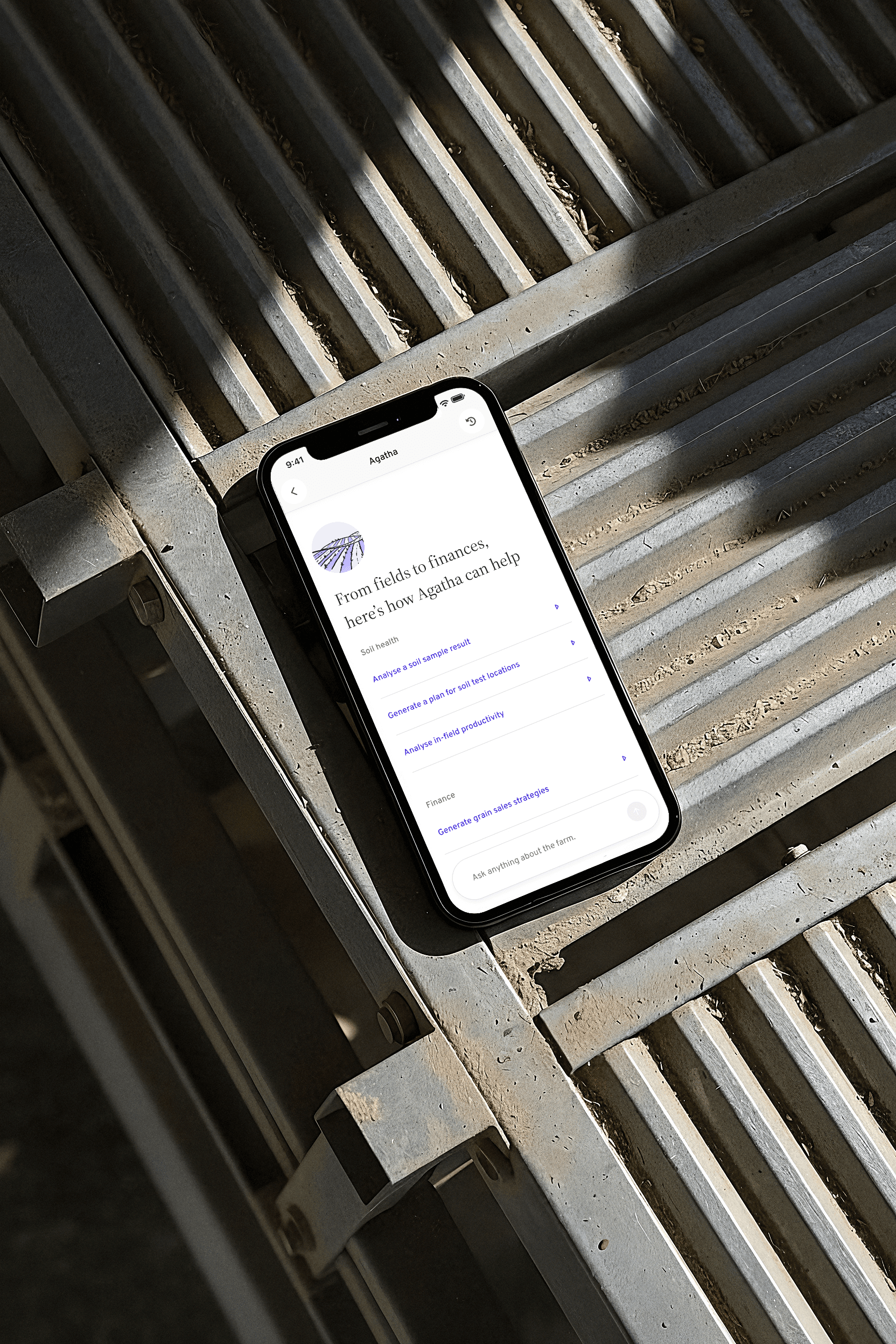
Introducing Agatha
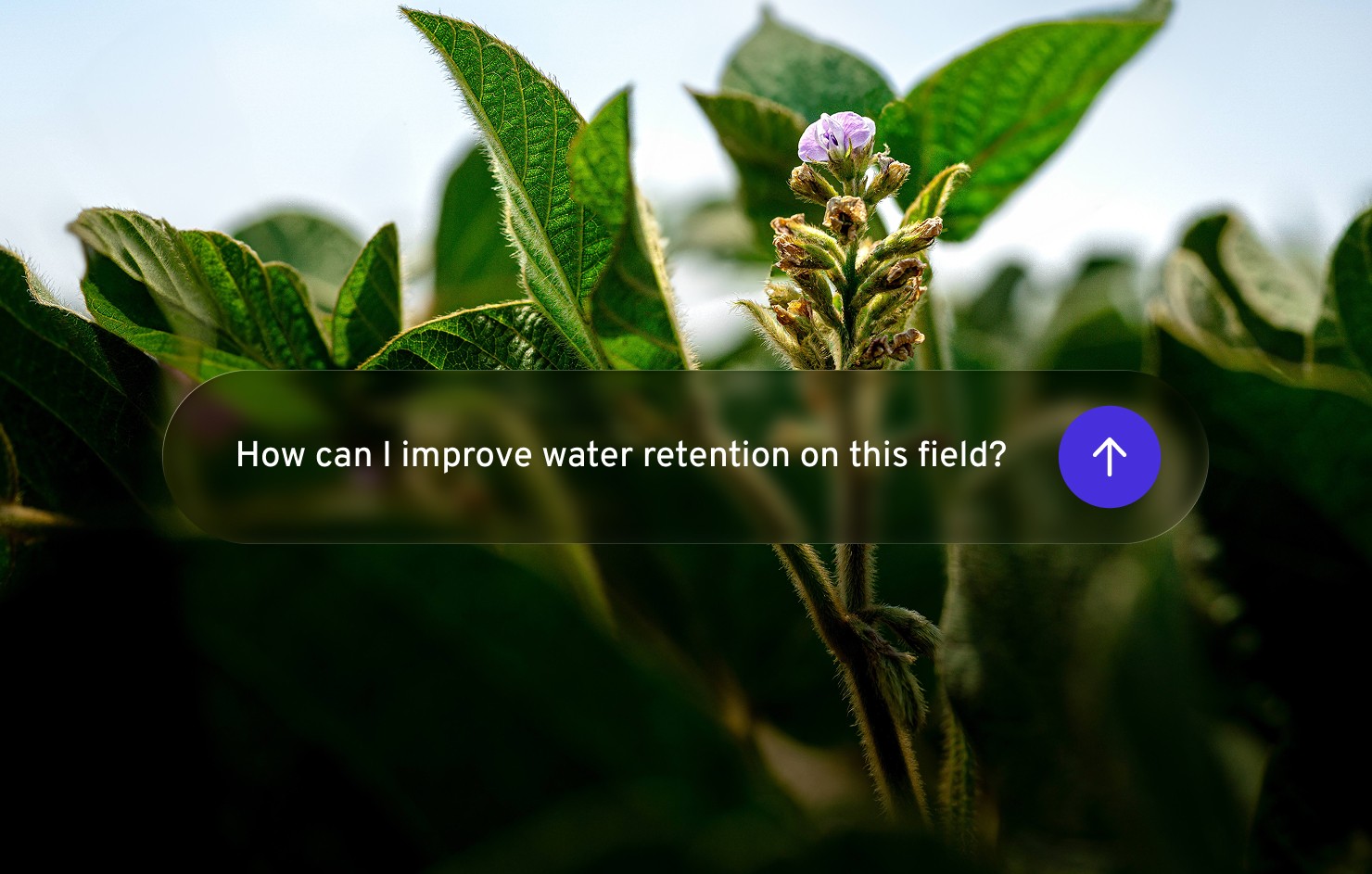
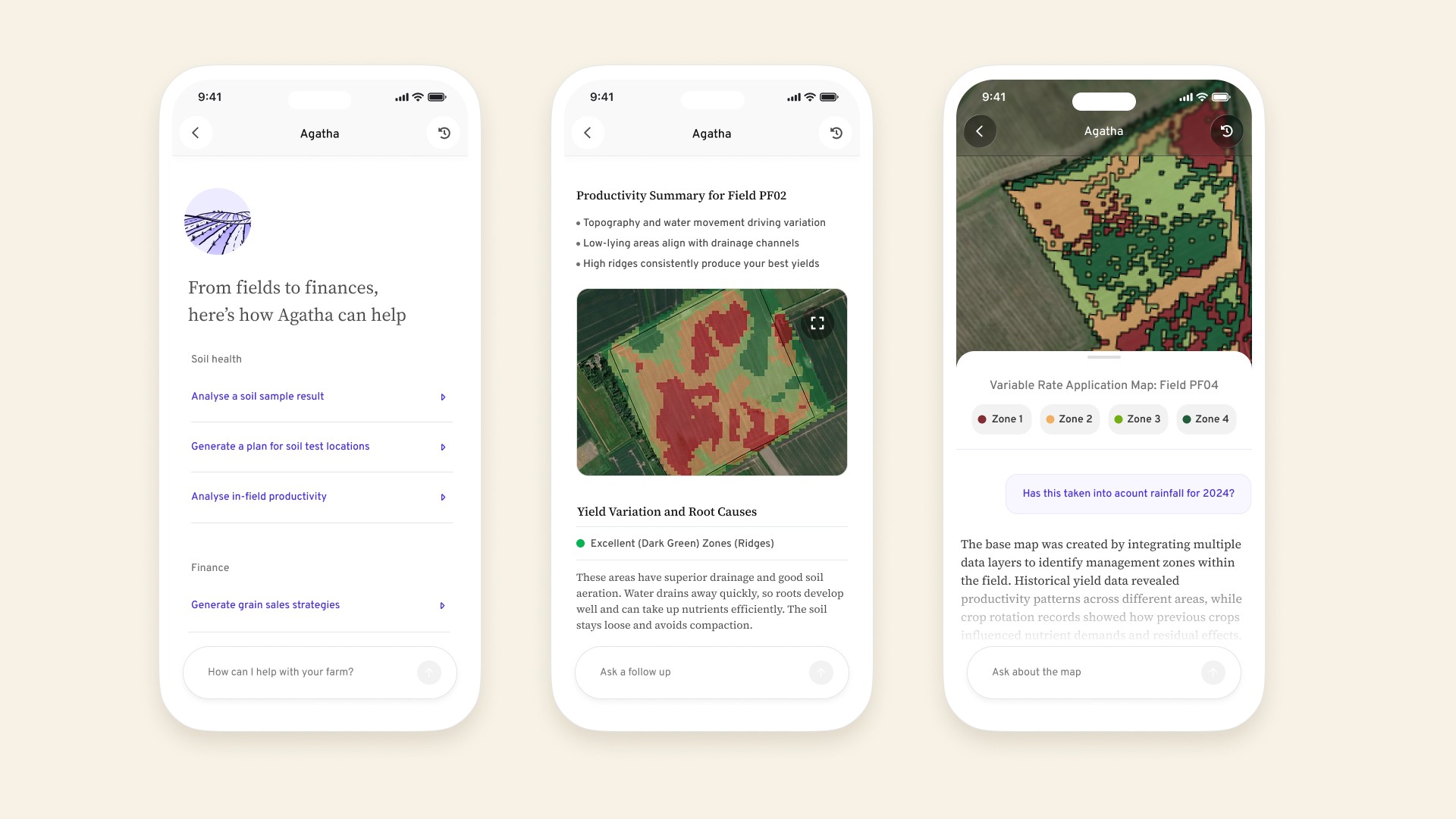
Agatha is an AI-powered assistant designed to provide farmers with data-driven insights and support for daily decision making and farm management. Unlike generic large language models, Agatha is built specifically for agricultural contexts, integrating proprietary remote sensing data (such as field practice detection), AgreenaGro platform data, and web search with large language models.

Understanding the trust barrier
In early research interviews, scepticism around AI was widespread. A typical response was "this wouldn't work for me because it can't know everything that's happened on the field." In one session, Agatha even recommended a product that was illegal in the UK, completely undermining confidence in the output. Learning from failures like these informed our approach to building trust.
When we reframed Agatha as verification tool, never a replacement for judgement and led with time-saving features, sentiment shifted markedly. To improve specificity, a modular architecture was developed to access remote sensing and contextual data, grounding recommendations in farm-specific conditions whilst maintaining clear separation between systems.
Designing for adoption
In order for farmers to adopt any new system, they need to understand and evaluate it at the point of use. This shaped core design principles:
Farmers are guided through scaffolded journeys that help them see value quickly, without feeling overwhelmed. Information is structured, visual, and interactive rather than presented as walls of text. Workflows are designed to combine deterministic UX patterns with space for more open-ended exploration where it makes sense.
Transparency runs through the experience. During onboarding, farmers receive a clear summary of how Agatha works, what its limitations are, and how their data is used. Provenance and usage remain visible throughout, so farmers always know exactly what's being drawn on at key moments. Internally, this principle extended beyond the product itself — teams aligned their processes to achieve certification with Farm Data Principles (like GDPR for agriculture).
With transparency built into the experience and anchored around real workflows, sentiment and task completion scores improved markedly.
The competitive advantage: data and experience design
Proprietary data is Agatha's foundation. Whilst LLMs are commoditising, our remote sensing capabilities and integrated AgreenaGro platform data create insights no generic AI can replicate. But data alone isn't enough. The real advantage lies in how it's presented. Farmers want insights that integrate into their workflows, built on a genuine understanding of how they work. That's what's difficult to copy.
Agatha proves that the most powerful AI isn't the most complex, it's the most trusted. By embedding design thinking early and grounding decisions insights from user research, we've created a system that makes farmers' expertise sharper and saves them time. That foundation of trust is what unlocks sustainable adoption, and at scale, that's how AI can create positive environmental impact.